




Price:
(as of Aug 04, 2026 07:40:18 UTC – Details)

Lenovo ThinkPad X9 15 Aura Edition Review: Redefining the Premium Mobile Workstation
The ThinkPad lineage has long been synonymous with corporate reliability, utilitarian design, and the iconic TrackPoint. For decades, the X1 Carbon sat at the apex of this pyramid, defining what an ultraportable business laptop should be. With the introduction of the ThinkPad X9 15 Aura Edition, Lenovo signals a bold departure from tradition. This is not merely an iterative update; it is a architectural reset. Boasting a revolutionary aluminum unibody, a 15.3-inch OLED touchscreen, and the raw neural processing horsepower of the Intel Core Ultra 7 258V “Lunar Lake” platform, the X9 15 positions itself as the spiritual successor to the X1 Carbon throne—lighter, sleeker, and significantly more intelligent.
Design Philosophy: The Aluminum Monolith
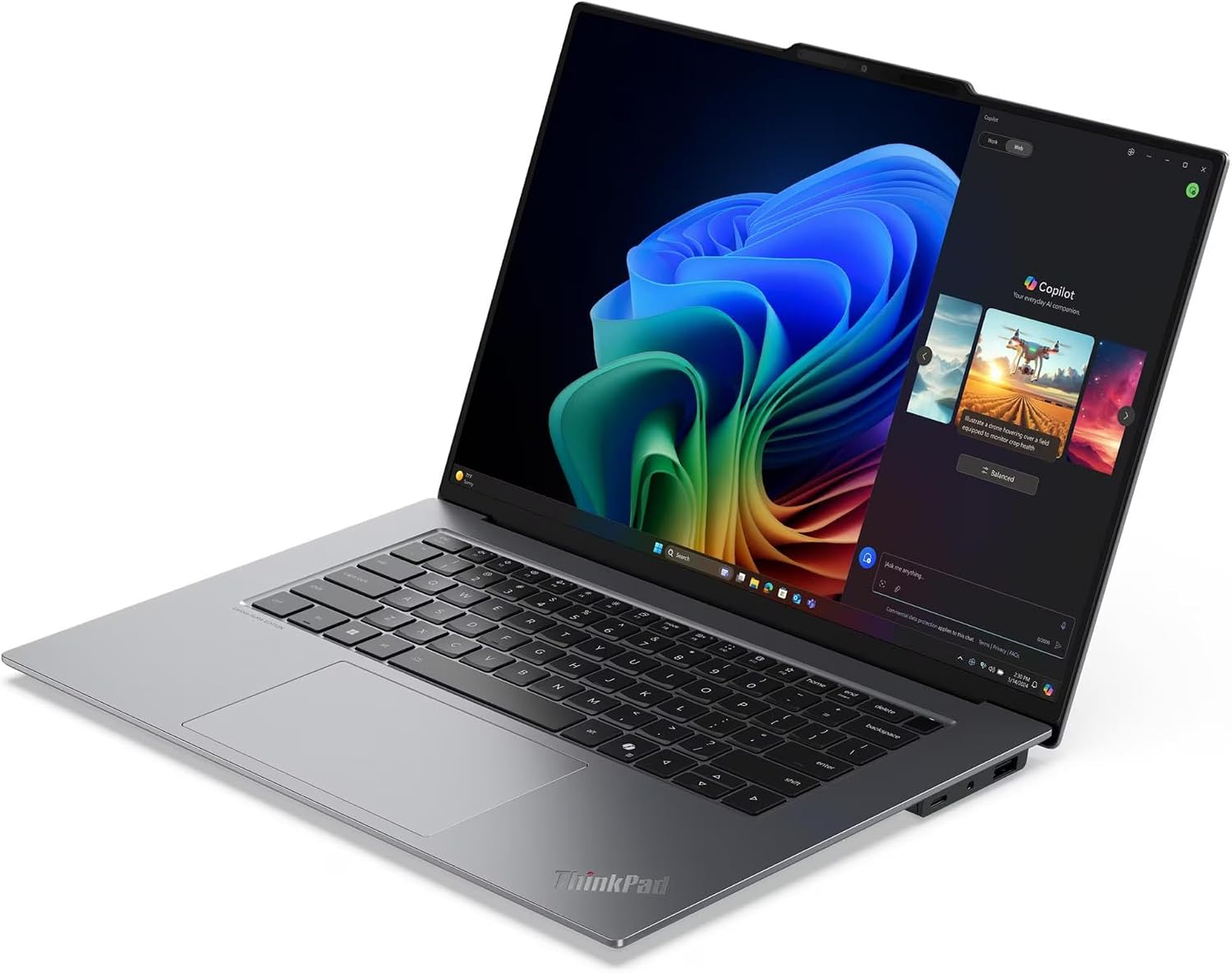
The most immediate departure from ThinkPad orthodoxy is the chassis. Gone is the signature carbon-fiber weave and magnesium alloy hybrid. In its place sits an ultrathin, CNC-machined aluminum frame finished in a sophisticated Grey hue. The product literature emphasizes “stunning sophistication” blended with “uncompromising performance,” and the physical specifications bear this out. At 0.51 inches thin and weighing just 3.08 lbs (1.4 kg), the X9 15 achieves a feat of engineering that makes the already-svelte X1 Carbon feel comparatively dense.
Despite the shift to a monolithic aluminum structure, durability remains a cornerstone. The device meets MIL-STD-810H standards, ensuring it survives the rigors of executive travel—vibration, shock, thermal extremes, and altitude. The “Elite Ultra-Portable Durability” claim is backed by a design that feels cold, rigid, and precision-tooled to the touch. The 180-degree lay-flat hinge adds functional versatility for collaborative sessions, while the elimination of the physical TrackPoint buttons (replaced by a haptic ForcePad) streamlines the palm rest into a clean, uninterrupted plane. It is a design language that whispers “premium” rather than shouting “rugged,” targeting the modern executive who moves between boardrooms and airport lounges with equal frequency.
The Visual Centerpiece: 15.3-Inch 2.8K OLED Touch
If the chassis is the skeleton, the display is the soul of the X9 15. The 15.3-inch 2.8K (2880 x 1800) OLED panel is a masterclass in mobile display technology. Operating at a 120Hz refresh rate with 500 nits of brightness (peaking at HDR 600 True Black), it delivers the inky blacks, infinite contrast, and 100% DCI-P3 color gamut coverage that creative professionals demand.
The spec sheet reads like a certification checklist: X-Rite factory calibration, TÜV Rheinland Low Blue Light and Eye Comfort certifications, Eyesafe certification, and Dolby Vision support. The anti-reflection/anti-smudge coating is a critical practical addition for a touchscreen device intended for outdoor or bright-office use. The 16:10 aspect ratio (WQXGA+) provides generous vertical real estate for coding, document review, and spreadsheet management. The inclusion of 10-point multi-touch and pen support (optional) transforms the clamshell into a versatile canvas for annotation and whiteboarding, bridging the gap between traditional laptop and creative tablet.
Silicon Architecture: Intel Core Ultra 7 258V & The AI Paradigm Shift
Under the hood lies the Intel Core Ultra 7 258V (Series 2 “Lunar Lake”). This is not just a CPU upgrade; it is a systemic shift toward heterogeneous computing. The processor features 8 Cores / 8 Threads (a mix of Performance and Efficient cores) with a Max Turbo of 4.8 GHz and 12MB Cache. However, the headline figure is the NPU (Neural Processing Unit) delivering up to 47 TOPS (Trillion Operations Per Second).
This NPU performance qualifies the X9 15 as a Copilot+ PC, a designation that fundamentally changes the Windows 11 experience. By running AI workloads locally—rather than relying on cloud round-trips—the laptop enables features like Live Captions (real-time translation/transcription), Cocreator in Paint (real-time image generation), Restyle Image, and Windows Studio Effects with negligible latency and maximum data privacy.
The 32GB LPDDR5X-8533 MT/s RAM is soldered (on-package memory), a necessity for Lunar Lake’s power efficiency and bandwidth requirements. While this removes user upgradability, the 8533 MT/s speed feeds the integrated Intel Arc Graphics 140V (Xe2 architecture) massive bandwidth, enabling surprisingly capable 3D rendering, video encoding, and light gaming performance previously impossible on thin-and-light integrated graphics. Storage is handled by a 2TB PCIe NVMe M.2 SSD (noted as an upgraded component via the reseller, Issaquah Highlands Tech, with a separate 3-year warranty on the drive), providing ample high-speed capacity for local AI models and massive project files.
Connectivity: The Modern Port Strategy
The I/O layout reflects a “dongle-free” ambition for the modern workflow. The X9 15 features:
- 2x Thunderbolt 4 (USB4 40Gbps) with USB PD 3.0 and DisplayPort 2.1 support.
- 1x HDMI 2.1 (supporting 4K/60Hz natively).
- 1x USB-A 3.2 Gen 2 (Always On) for legacy peripherals.
- 3.5mm Combo Jack.
Crucially, the dual Thunderbolt 4 ports plus HDMI 2.1 allow for three external monitors simultaneously (up to 8K/60Hz via TB4, 4K/60Hz via HDMI), a workflow requirement for financial analysts and developers. Wireless connectivity is future-proofed with Intel Wi-Fi 7 BE201 (2×2) and Bluetooth 5.4.
The bundle includes the IST Computers 7-in-1 Hub, a thoughtful addition that restores HDMI (4K@30Hz), USB-C 2.0, two USB 2.0 ports, SD/TF card slots, and Type-C Power Delivery—addressing the “port anxiety” critics often level at ultra-thin designs.
Audio, Input, and Security: The Professional Toolkit
Lenovo has not neglected the sensory experience. The SoundWire implementation with Cirrus Logic CS42L43 codec drives a quad-speaker array (2x 2W Woofers + 2x 2W Tweeters) tuned with Dolby Atmos. For a 3-lb chassis, the spatial separation and bass presence are remarkable, making this a credible device for media consumption and conference calls without external speakers.
The 8MP IR Camera with a physical e-shutter supports Windows Hello facial recognition, complemented by a Fingerprint Reader (likely integrated into the power button) and dTPM 2.0. This tri-factor authentication suite satisfies enterprise Zero Trust security policies.
The keyboard remains a ThinkPad hallmark: backlit, spill-resistant, and featuring the new Copilot key for instant AI invocation. The key travel is shallow by X1 Carbon standards—inevitable in a 0.51″ chassis—but the tactile feedback is crisp. The Haptic TouchPad (ForcePad) replaces the traditional TrackPoint buttons; while purists may mourn the physical buttons, the haptic implementation allows for a larger tracking surface and customizable click zones.
Battery Life and Thermals: Efficiency Unleashed
The 80Whr battery paired with Lunar Lake’s extreme efficiency (enabled by on-package RAM and the low-power E-cores) promises up to 20 hours of battery life (MobileMark 2018). Real-world mixed usage (browsing, video playback, Office apps) should comfortably clear a full workday on a single charge. The included 65W USB-C GaN adapter supports rapid charging via Power Delivery 3.0, and the USB-A “Always On” port allows charging phones even when the laptop is asleep or off.
Thermally, the aluminum unibody acts as a massive heatsink. The fan curve is tuned for silence during light loads (email, browsing), spinning up only during sustained heavy lifts like 4K video export or local LLM inference. The “AI optimizes energy use” claim suggests dynamic power management via the NPU, balancing performance states based on workload prediction.
The Aura Edition Experience: Software Differentiation
The “Aura Edition” branding denotes a curated software layer co-developed with Intel. Smart Share is the standout feature: an AI virtual sensor allowing instant phone-to-laptop connection via a simple tap (Android or iOS), enabling drag-and-drop file transfer, photo editing sync, and SMS messaging from the PC desktop. Adaptive Workspace integrates PowerPoint and Edge for streamlined presentation prep. These features leverage the 47 TOPS NPU to keep processing local, reinforcing the “data privacy” narrative critical for enterprise adoption.
Warranty Nuance: A Critical Buyer Consideration
Potential buyers must note the specific warranty structure disclosed by the seller (Issaquah Highlands Tech): “Brand New Computer has been resealed to upgrade the SSD. Three-year warranty from Issaquah Highlands Tech on upgraded SSD. One-year warranty from Lenovo on remaining components.” This is a standard “Value Added Reseller” model. The base laptop is factory-new, but the seal was broken to install the 2TB drive. This voids the standard Lenovo depot warranty for the storage component specifically, replacing it with the reseller’s 3-year coverage. For the CPU, motherboard, screen, and chassis, the standard 1-year Lenovo warranty applies (extendable via Lenovo services).
Verdict: The New Benchmark
The Lenovo ThinkPad X9 15 Aura Edition is a watershed moment for the brand. It successfully sheds the “black box” utilitarian aesthetic for a design language that competes directly with the MacBook Pro and Dell XPS 15 on visual prestige, while retaining the ThinkPad DNA of durability, security, and input excellence.
Who is this for?
- C-Suite & Consultants: Who need a status device that survives travel and handles 15-hour flights on battery.
- Creative Professionals: Who require 100% DCI-P3 OLED accuracy, touch/pen support, and local AI acceleration (Cocreator, Restyle) in a 3-lb package.
- Developers & Data Scientists: Who benefit from 32GB fast RAM, 2TB storage, Linux subsystem support, and the NPU for local model inference.
The Trade-offs:
- Soldered RAM (no future upgrade).
- Shallow keyboard travel vs. classic ThinkPads.
- Reseller warranty complexity on the SSD.
- Premium pricing reflective of the “Aura” tier.
Ultimately, the X9 15 does not just replace the X1 Carbon; it transcends it. It proves that an ultraportable can possess a best-in-class display, flagship silicon, all-day battery, and a luxury build without compromise. It is, by every metric provided in the specifications, the most complete Windows laptop on the market today.